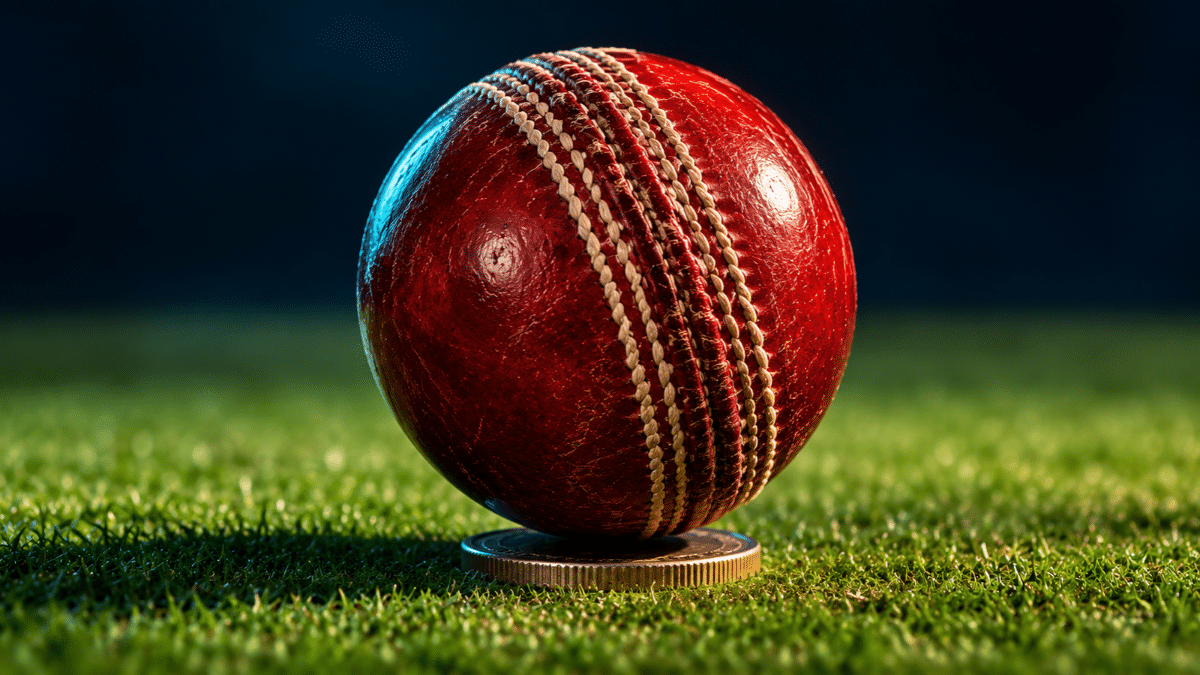
Test cricket ball choice should be made match by match, for the pitch and the weather, not fixed by the country hosting the series. Under the ICC’s Test playing conditions, the home board supplies one brand for the whole match and must name it at least 30 days before the start. That rule ignores the single thing that shapes a Test most.
A Dukes, an SG and a Kookaburra each reward different skills. Put the wrong one on the wrong surface and the five days lose their balance before they begin. It belongs on the list of cricket rule changes the game still needs.
Ask any bowling unit what it talks about first before a Test, and the answer is not the batter.
The ball decides a Test before the bowlers do. A Dukes, an SG and a Kookaburra each reward different skills, so the ball should be picked for the pitch and the weather, not for the country. Let the captains agree on it before every Test, and let the toss decide when they cannot.
Cricket Voices, 12 November 2026
Key facts
- Under ICC Test playing conditions, the home board names one ball brand at least 30 days before a match.
- In 2024, 17 of the 18 County Championship games in the opening two Kookaburra rounds ended in draws.
- Joe Root was out lbw seven times in nine dismissals during England’s 2026 home summer.
- The ICC pink-ball trial, for series starting from 1 October 2026, lets both teams agree on the ball before a Test.
England has already shown what the wrong ball does. The Kookaburra was brought into selected County Championship rounds from 2023. In 2024, 17 of the 18 games in its opening two rounds were drawn.
In 2025, Surrey piled up 820 for 9 declared against Durham with it. The counties scrapped the trial, and all 14 rounds of the 2026 Championship went back to the Dukes.
“…for Australian conditions on wickets that are harder and have got some carry.”
Darren Lehmann, Northamptonshire head coach, on the county Kookaburra trial, 2025
Too much help fails as well. Pakistan used the Kookaburra in first-class cricket from 2019 to 2023-24, then switched to the Dukes. From 2026-27 it goes back to the Kookaburra, over concerns that the Dukes gave seamers too much help on grassy, moist pitches.
Neither ball was bad. Each was wrong for the surface it met.
Conditions can turn even inside one summer. Root was out lbw seven times in nine dismissals during England’s 2026 home summer, averaging 29.44, and suggested the Dukes now carried a different lacquer. The manufacturer rejected that and pointed to the weather.
“So within two Test matches, there were totally different conditions.”
Dilip Jajodia, Dukes owner, speaking to the Indian Express, September 2026
If conditions can change that much between two Tests, a brand fixed a month in advance cannot fit them.
How Test Cricket Ball Choice Should Work
One global ball is not the answer. Virat Kohli asked for the Dukes in every Test back in 2018, but England’s draws and Pakistan’s U-turn show that one ball on every surface tilts the game one way or the other.
Letting the away side pick sounds fair and would test the home team. In practice, it starts an argument before every Test.
The cleaner rule is for both captains to agree on the ball after inspecting the pitch and checking the weather, with the toss settling any deadlock. The ICC already accepts the first half of this.
Under its new playing conditions for series starting from 1 October 2026, teams can agree before a daytime Test to use a pink ball, and that choice holds for the whole match. Choosing the brand is the same decision taken one step further.
Insider Read
The first thing a bowling unit talks about is not the batter. It is the ball. Each ball does a different job in different conditions: the Dukes’ swing, the Kookaburra’s early burst then patience, the SG’s grip and reverse. With a Dukes, you pitch it up and keep three slips in all day. With a Kookaburra, you attack for about 30 overs, then go defensive and wait. Batters plan the same way: they leave against a Dukes and score against an old Kookaburra.
So when the ball doesn’t suit the surface, half the game disappears. A Kookaburra on a soft, slow pitch gives no carry and no swing. A Dukes on a green, damp pitch ends the contest by lunch. Let both captains agree on the ball for the pitch and the forecast. If they can’t, the toss winner reads the surface and the sky together, picks the ball and chooses to bat or bowl. It is one read, and if he gets it wrong, he lives with it for five days.
The next big test comes soon. The 2027 Border-Gavaskar Trophy starts on 21 January in Nagpur, and the Guwahati Test could use a pink ball because of the early sunset. Guwahati’s only previous Test, in November 2025, was won by South Africa by 408 runs.
A series already open to changing the ball’s colour should be open to changing its brand. Test cricket ball choice belongs to the conditions, and the people best placed to read them are the two captains.
Also Read: