
One afternoon in Mumbai, India’s captain watched a man he deeply respected sit outside a board official’s room and wait. The Secretary was asleep. The man waiting was Chandu Borde. All he needed was his travel allowance for the match just completed. He waited for hours.
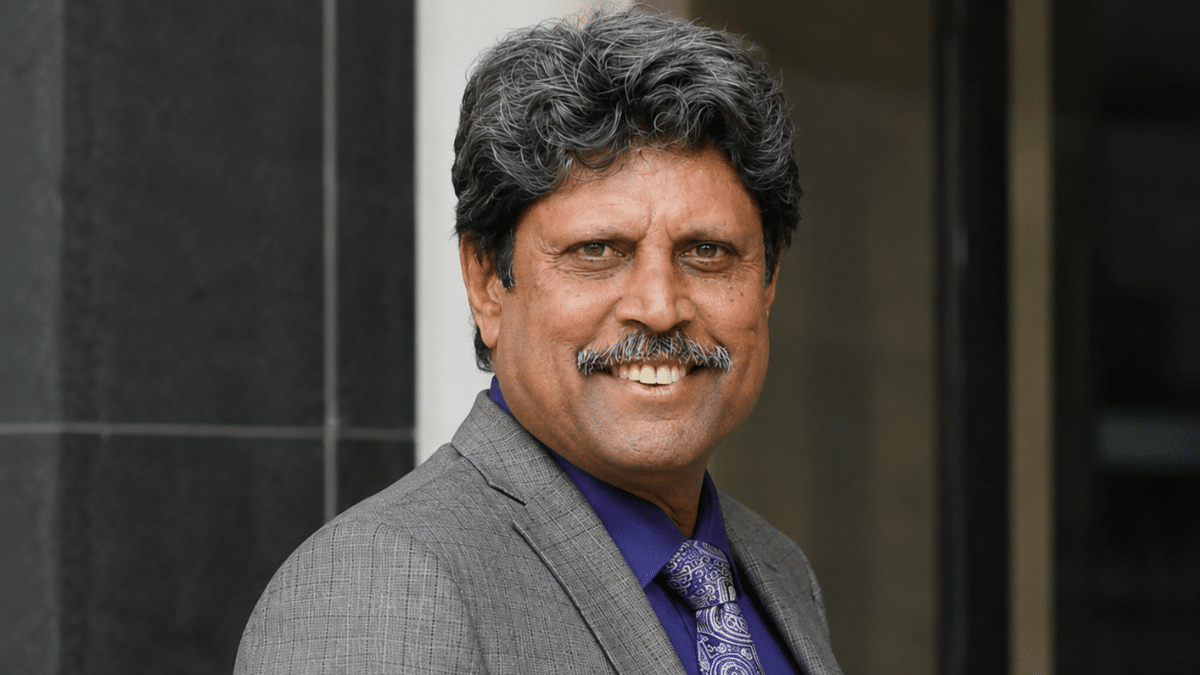
Speaking on Sports Tak this week, Kapil Dev said that image has stayed with him ever since.
Borde was not a minor figure in Indian cricket. Between 1958 and 1969, he played 55 Tests, scoring over 3,000 runs against some of the most feared pace attacks in the world. After his playing career, he moved into administration and chaired the selection committee that assembled India’s 1983 World Cup squad, the same squad Kapil led to the title at Lord’s. Kapil considered him one of the greats of his era.
To understand why that image hit so hard, you need to understand what Indian cricket looked like in 1983. Nobody expected India to win the World Cup. Viewership was negligible. Players had no endorsement deals and often no fixed salary. What the board gave was TA and DA, travel allowance and daily allowance. For many, that was the whole of their financial relationship with Indian cricket. Even the men who returned from Lord’s with that trophy had nothing guaranteed beyond the game itself.
Borde belonged to a generation that played without contracts, without commercial backing, and without any safety net after their careers ended. Watching him wait for hours, after all he had given to the game and after helping build the squad that changed Indian cricket forever, told Kapil exactly where he could end up if he did not plan ahead.
Insider Read:
The trap most cricketers fall into is not laziness. It is a mental block. Planning for life after cricket feels, while you are still playing, like admitting the career is going to end. Nobody wants to confront that while the ground is still full.
The board looks after its current players well. Tours, recognition, the calls, all of it arrives while you are active. What Kapil saw in that Mumbai corridor was what comes after. Once the career ends, the institution moves on. There is no structured transition, no financial guidance, no programme to help a player navigate what follows. The player is left to figure it out alone.
What makes it hardest is the identity piece. A cricketer who has spent fifteen or twenty years being introduced by the sport one day wakes up without that introduction. The ground is gone, the crowd is gone, the role that defined everything about them is suddenly past tense. Most players are not ready for that silence.
Those players who won in 1983 brought India its greatest cricket moment. Yet even they had no financial infrastructure, no post-career plan, nothing that could protect them from exactly what Borde experienced in that waiting room. The crop of players reaching the end of their careers today has more resources, more endorsements, more visibility than that generation ever had. And most of them are making exactly the same mistake.
What Kapil did differently was act early, while still captain, while still at the peak of everything. He started building when he still had time. That is the thing most former players understand only after the last match has already been played.
“Don’t say ‘retired,’ say ‘former.’ Retirement is only when God calls you. Until then, you should work; what is the problem with that?”
Kapil Dev, Sports Tak podcast with Vikrant Gupta, July 5, 2026
The KDSG Super-Speciality Hospital in Greater Noida is what that philosophy looks like in practice. Co-founded by Kapil Dev and businessman Sunil Kumar Gupta, the 300-bed facility was inaugurated by Uttar Pradesh Chief Minister Yogi Adityanath in March 2026. Built at approximately INR 200 crore, it covers cardiology, oncology, neurology, orthopaedics, gastroenterology and critical care.
“KDSG was built on a founding belief that quality healthcare must be honest, affordable and completely centred on the patient. Greater Noida deserved an institution built on those values, and today we are proud to deliver it.”
Kapil Dev, KDSG Hospital inauguration, Greater Noida, March 2026
For Indian cricketers now approaching the end of their careers, the lesson from India’s 1983 captain is not complicated. One afternoon in Mumbai changed how he thought about everything that followed. Whether today’s players are asking the same questions early enough is a different matter. An earlier piece on this site covered how Ben Stokes approached the end of his playing career.
SOURCES
- Kapil Dev, Sports Tak podcast with Vikrant Gupta, July 5, 2026 YouTube
- KDSG Hospital inauguration, Greater Noida, March 2026 BW Healthcare World
- Chandu Borde career background Grokipedia
- Kapil Dev career background Wikipedia