In March, Sanju Samson scored 89 off 46 balls in the T20 World Cup final. India won by 96 runs. He finished that tournament with 321 runs from five innings, an average of 80, and a strike rate of 199. He was named Player of the Tournament.
On July 4 at Old Trafford, Shreyas Iyer gave a one-line explanation at the toss: “One change. Vaibhav comes in for Sanju.”
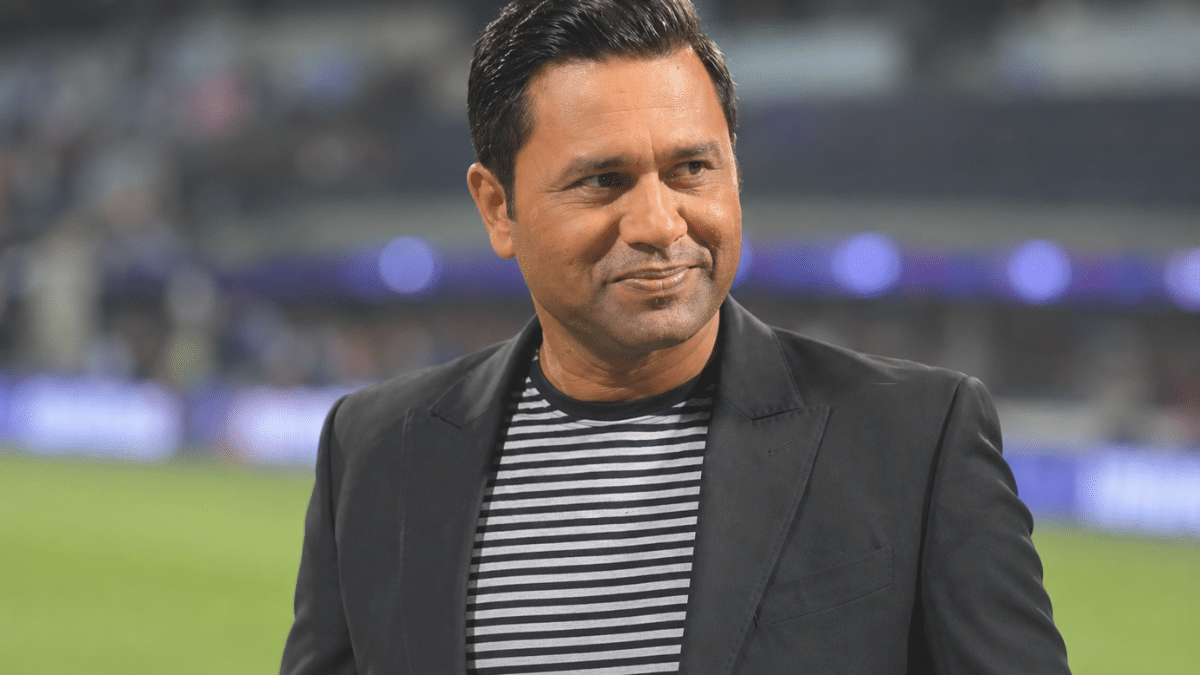
Aakash Chopra had predicted exactly this, publicly, after the Ireland series loss at the end of June.
“If someone has to go out, the first man on the chopping block is Sanju.”
Aakash Chopra, YouTube channel, June 2026
He did not say the most out-of-form player. He said specifically Samson, because that is how India’s selection pressure has always worked around him.
Chopra’s position moved more than once across the six weeks between Ireland and Manchester. Before the first England T20I, he dropped Samson from his preferred XI and called for Sooryavanshi to open all five games. Before the second, he reversed: kept Samson in and urged patience. “The decision-makers might give him one more chance,” Chopra said. They did not. His earlier, harsher position turned out to be the accurate one.
India’s coaching staff had offered something publicly consistent in the days before the series. Assistant coach Ryan ten Doeschate said it was “not a question” to leave Samson out, pointing to his role in India winning the World Cup three months earlier. Morne Morkel followed: he said it was “fair to back your players” when asked about Sooryavanshi’s wait for a place. At the toss on July 4, neither addressed Samson’s absence. Iyer only spoke about the player coming in.
“He completely deserves it, the way he has performed that last couple of months. He doesn’t take pressure, you see him in the dressing room and he has that unflinching nature.”
Shreyas Iyer, at the toss, 2nd T20I, Manchester, July 4, 2026
Sooryavanshi debuted, scored 14 off 10 balls, and hit a six off Jofra Archer from his first delivery. England won the second T20I by four wickets. The series stands 1-0.
Insider Read:
Being in a squad but not the XI mid-series is a specific position that does not get discussed much. You warm up with the team every morning. You wear the jersey on match day. You sit at the ground and watch. You are not dropped from the tour, which means you have to stay ready. But you do not know if you are playing tomorrow, so every training session carries a different weight. You are not preparing to play. You are preparing in case you play.
For a batter, rhythm comes from certainty. That certainty is exactly what sitting out removes. The half-in, half-out state costs you something, and you only know how much once you are back at the crease under match pressure.
Coming back mid-series is also not like a debut. When a player makes their debut, the ground is open. Expectations are undefined. When you return after being dropped, the XI knows you sat out the last game. You know they know. You are not proving yourself for the first time. You are walking out to prove the last ten days did not change you. That is a harder thing to do.
There is a tactical dimension to this story that has not been said clearly in most of the coverage. India’s batting line-up carries a significant number of left-handers: Abhishek Sharma, Ishan Kishan, Tilak Varma, Shivam Dube. Every overseas team India face arrives with an off-spinner’s plan for that. Angling the ball into a left-hander, tightening the line outside off stump, squeezing them for room, it is one of the oldest pressure tools in the game. A right-hander at the top of the order breaks that plan from ball one. It changes the field the captain sets, the angle of attack, and forces the bowling side to reset their entire strategy when the match-up shifts.
Samson, opening as a right-hander, was that counter. His World Cup place was built partly on this same logic. During that tournament, Abhishek Sharma was struggling. He failed in multiple games. The management backed him through those failures because they understood his value to the combination, and because breaking a settled unit mid-tournament carries its own risks. Samson eventually came into the XI, formed that right-left pairing at the top with Abhishek, and delivered. He finished as Player of the Tournament.
The management that showed patience with a struggling left-hander through the World Cup, and won it, is the same management now showing less patience with the right-hander who made the most of his own chance when it came. The logic of combination has not changed. India still have the same left-heavy batting line-up. What has changed is who is doing the waiting.
The 3rd T20I is at Trent Bridge tonight. Chopra’s own plan for this series was explicit: Sooryavanshi all five games, with Samson returning from game 3 by rotating out Abhishek or Ishan. By that plan, tonight is the moment. Whether the management follows that template or builds a different answer, India are 1-0 down with three games left.
Samson had already said what he intended to do about all of this, months before it began.
“Whatever it is, I’ll do it, but I’ll do it my way. No one is going to tell me how to play cricket. No one is going to tell me, ‘Sanju, play this way or that way’ — Sanju will play in Sanju’s own way.”
Sanju Samson, interview with Aakash Chopra, 2026
At Trent Bridge tonight, those words are waiting for their answer.
Sources
- Aakash Chopra “chopping block” prediction Circleofcricket
- Aakash Chopra pre-2nd T20I patience quote Crictoday
- Ryan ten Doeschate quote CricketNews
- Morne Morkel quote Crictoday
- Shreyas Iyer toss time ESPNcricinfo
- Sanju Samson Player of Tournament stats BCCI.tv
- Sanju Samson interview with Aakash Chopra YouTube
- Aakash Chopra IPL 2026 Samson analysis YouTube