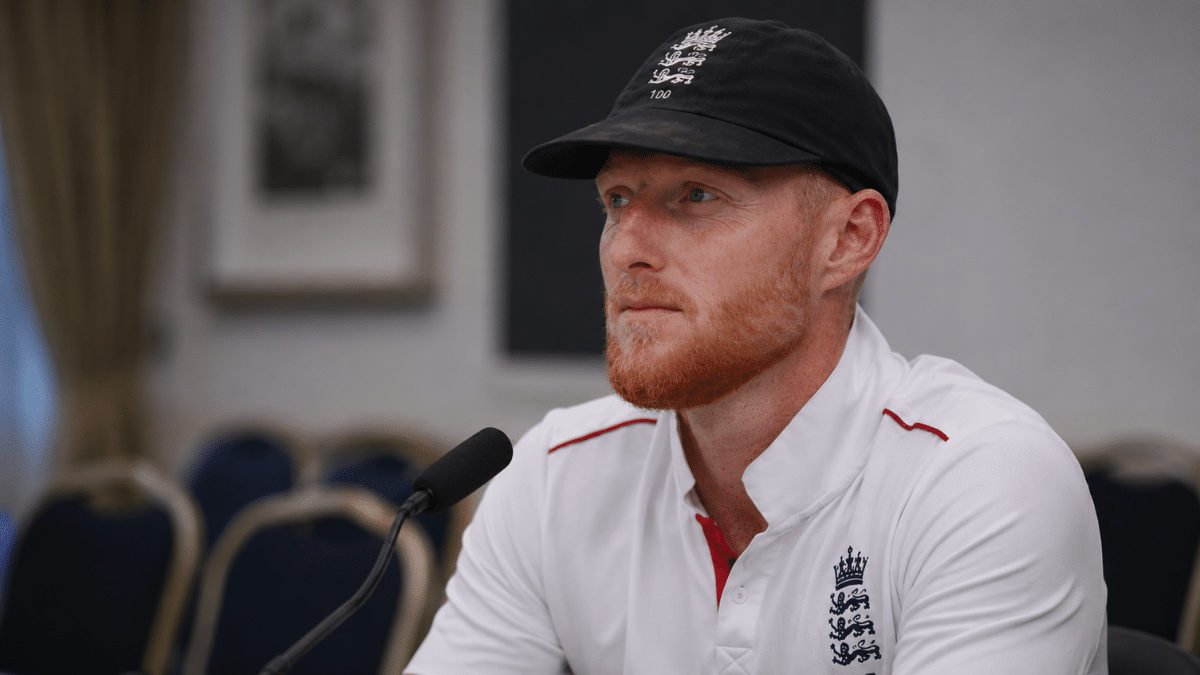
A captain who gets stood down by his own board does not walk back into the dressing room as the same leader who left. He walks back in as someone the room is assessing. That is the reality Ben Stokes faced on Tuesday at Trent Bridge, and no amount of carefully chosen words at a press conference can change what actually happens when the door closes and the team is alone.
“It would be stupid and naive for me not to acknowledge that and address that. It’s all fine and well everything being fine and dandy when it’s going well, but you need to take responsibility for things as well. If that’s you that needs to take that responsibility, you need to be big enough and man enough to be able to take that upon your shoulders, look everyone in the eye, and apologise how you need to apologise. That’s what I did.”
-Ben Stokes, pre-match press conference, Trent Bridge, June 24, 2026
Stokes was speaking publicly for the first time since being stood down for the second Test against New Zealand at The Oval. He and fast bowler Gus Atkinson were removed from the squad after breaching the team’s midnight curfew following England’s victory in the first Test at Lord’s. The two were present at a Chelsea nightclub, Rex Rooms, in the early hours of June 8. An altercation involving a Saracens rugby player and an ECB security officer took place at the venue. Investigations by both the ECB and the independent Cricket Regulator cleared Stokes and Atkinson of any violent conduct. Both received written warnings for breaching contractual obligations. No further sanctions were imposed.
ECB Statement: Ben Stokes and Gus Atkinson
— England Cricket (@englandcricket) June 8, 2026
In their absence, Joe Root captained a much-changed England side at The Oval. Five changes from the Lord’s Test. Three players made their Test debuts: James Rew, Sonny Baker, and Jordan Cox. England were beaten by 253 runs. Matt Henry took 11 wickets in the match, the best figures by a New Zealand bowler against England in Test history. The series is now level at 1-1 heading into today’s decider at Trent Bridge.
This was not an isolated incident. The curfew itself was introduced after a pattern of off-field discipline failures during the 4-1 Ashes defeat in Australia earlier this year. Players were photographed drinking during a mid-series break in Noosa. Ben Duckett was filmed apparently intoxicated. ECB managing director Rob Key denied a “drinking culture” at a press conference. Harry Brook, England’s white-ball captain and Test vice-captain, was fined £30,000 after being punched by a nightclub bouncer in Wellington the night before an ODI against New Zealand last October. He later admitted he had lied about being alone. Jacob Bethell and Josh Tongue were also fined for being present.
The curfew was the ECB’s answer to all of that. It lasted one Test match into the English summer.
Stokes acknowledged the damage at his press conference. He was direct about the impact on his teammates, particularly the young players who debuted at The Oval. “It affected Joe, it affected the squad, it affects the people outside the playing environment. It no doubt had an effect on lads who were making their debut. That should have been all about them, but unfortunately a situation out of their control took precedence over their big day of making their debut for England in Test cricket.”
He refused to commit to his long-term captaincy future, saying only that he was focused on this week. But in a separate interview with BBC Test Match Special, he went further. “I’m 35 now and, even before this stuff all happened, I thought, ‘Could I ever see myself playing for England and not being captain?’ It’s a question I’ve never really been able to answer. I love playing for England, I love being captain of this team and that’s where I’m at with everything.”
🗣️ 𝘼𝙛𝙩𝙚𝙧 𝙖 𝙙𝙞𝙛𝙛𝙞𝙘𝙪𝙡𝙩 𝙬𝙞𝙣𝙩𝙚𝙧… 𝙃𝙤𝙬 𝙘𝙡𝙤𝙨𝙚 𝙬𝙚𝙧𝙚 𝙮𝙤𝙪 𝙩𝙤 𝙬𝙖𝙡𝙠𝙞𝙣𝙜 𝙖𝙬𝙖𝙮?
Our full interview with Ben Stokes is now LIVE 👇
— England Cricket (@englandcricket) April 15, 2026
Head coach Brendon McCullum, who had notably declined to publicly back Stokes as captain during the investigation, struck a different tone once the all-rounder was cleared. On Tuesday, after what he described as an hour-long conversation with Stokes at Trent Bridge, McCullum told reporters: “He looks ready to go, he’s enthusiastic about the week and, obviously from our point of view, it’s nice to have the band back together.” That was a long way from what McCullum had said during the investigation, when his message was simpler and more revealing: “I worry for him.”
Root, who stepped in as interim captain, offered a quieter observation about the situation the debutants had been placed in. “In terms of depth and exposure, normally when guys come in it’s one at a time and they’re helped through by seniority and guys around them. This week’s been quite different with the circumstances.”
Insider Read
English cricket has seen this before. An all-rounder who defines a generation, wins an Ashes that changes the sport, then slowly loses authority through off-field discipline failures. Flintoff in 2007. Stokes in 2026. Both came off the back of an Ashes loss. Both broke a curfew that was introduced specifically because of previous incidents. Both were stood down, apologised, and returned. And in both cases, the real damage was not the incident itself. It was what the incident told everyone about the gap between the public image and the private reality. Flintoff was battling depression that nobody around him fully understood at the time. Stokes, at 35, is carrying four years of captaincy weight, an Ashes humiliation, a body that limits him to Tests only, and the knowledge that he is closer to the end than the beginning. The pattern is almost identical. The question English cricket should be asking is not whether Stokes should be captain. It is whether anyone around him is paying attention to what this pattern actually means.
And then there is what Stokes told the BBC. He said he has asked himself whether he could play for England without being captain, and he cannot answer that question. That is the kind of thing that sounds reflective and honest to the media. Inside a dressing room, it lands completely differently. In professional cricket, certainty flows downward. Players commit to a captain’s plans because they believe the captain will be there to see those plans through. When a captain says “I do not know if I will still be here,” every player in the room starts thinking about what comes next. Who takes over. Whether the plans change. Root was just captain again for a week. Brook is the vice-captain. Bethell is the future. A captain can doubt himself. Every captain does. But the moment you say it out loud, you are no longer leading. You are asking the room to wait for you. And dressing rooms do not wait.
But the people nobody is talking about are Baker, Cox, and Rew. Three young players who were handed their Test caps in circumstances no debutant should face. They walked out at The Oval with the media talking about the captain’s nightclub incident, not about their first day in international cricket. They played under a stand-in captain, in a team missing its best all-rounder and its strike bowler, against a New Zealand side that smelled blood. England lost by 253 runs. And now all three are out of the playing XI for the third Test, making room for the players whose absence created the opportunity in the first place.
That is the part that should bother anyone who has been in a dressing room. You cannot judge a young player on one Test match played under those conditions. Baker took three wickets. Cox showed he belongs. But cricket does not always give you a second chance to prove what you showed in the first. Sometimes that debut in the chaos is the only shot you get. Nobody in English cricket is guaranteeing these three that they will play again. And if they do not, it will not be because they failed. It will be because the system that put them in an impossible position moved on without asking whether it owed them another look.
The third Test at Trent Bridge starts today with the series level. Stokes is back as captain. Atkinson is back in the attack alongside Jofra Archer and Josh Tongue. Jamie Smith returns from paternity leave. Shoaib Bashir comes in as the frontline spinner, with extreme heat expected to bring turn later in the match. Ollie Robinson, who was Player of the Match at Lord’s with career-best figures, misses out despite being fit.
If England win, none of this will matter. The apology will be framed as a sign of strong leadership. McCullum’s “band back together” line will become the story. The curfew breach will fade into the background noise of another chaotic English summer. That is how cricket works. Results fix everything.
But if England lose, the questions will not stop at this series. They will go all the way back to the Ashes, through Noosa, through Wellington, through Rex Rooms, and land on a single point: at what stage does a pattern stop being a series of isolated incidents and start being a culture that the people in charge cannot fix?
Stokes said sorry. That part is done. The part that matters starts when he walks out for the toss.
July 3, 2026
England lost. New Zealand won the third Test by 160 runs to take the series 2-1, and Stokes walked out for that toss knowing it would be his last as England captain — he just hadn’t told anyone yet.
He announced his retirement from international cricket midway through the Test, on day four, with England already up against it in the chase. He remained on the field to lead the side out, then retired having ended his England career in a series defeat.
The debutant question this piece raised resolved itself too, if not the way anyone would have chosen: Baker, Cox, and Rew stayed out of the XI at Trent Bridge, and with English cricket now moving into a new era at the top, their next chance is an open question again.
Full coverage of the retirement, the reaction, and who succeeds Stokes as captain: Ben Stokes Retires from International Cricket.
Sources
- Ben Stokes pre-match press conference, Trent Bridge, June 24, 2026 — ESPNcricinfo
- Ben Stokes interview, BBC Test Match Special, June 24, 2026 — Yorkshire Post / PA
- Brendon McCullum press conference, Trent Bridge, June 23, 2026 — AFP / France24
- Joe Root post-match comments, The Oval, June 21, 2026 — AP / Washington Times
- ECB and Cricket Regulator investigation findings, June 22, 2026 — ESPNcricinfo
- Stokes and Atkinson curfew breach and Rex Rooms nightclub details — Sky Sports
- Sky Sports exclusive Stokes interview, Trent Bridge, June 25, 2026 — Sky Sports
- Harry Brook nightclub bouncer incident, Wellington, October 2025 — Sky Sports
- Brook, Bethell, Tongue disciplinary outcome — Sky Sports
- England vs New Zealand 3rd Test match preview and squad — ESPNcricinfo