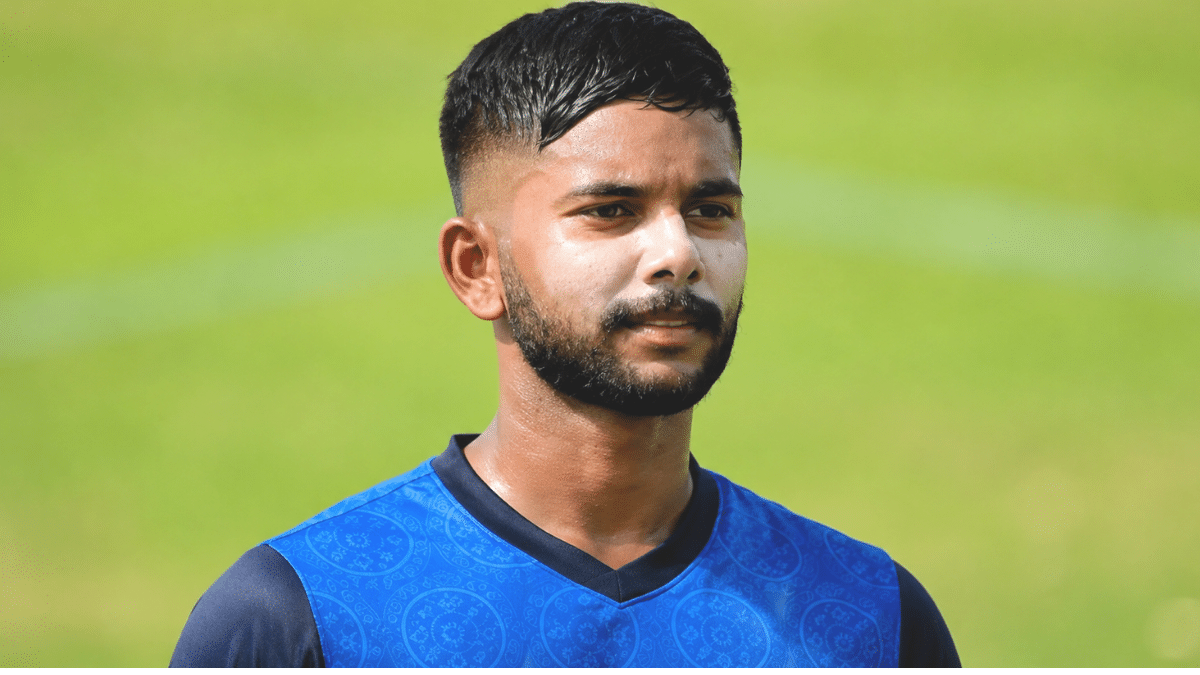

Ollie Robinson’s Test bowling average of 20.87 after 22 matches places him second only to Jasprit Bumrah among all bowlers with a minimum of 20 Tests in the last 100 years. For an England seamer who was told he might never play international cricket again, that number tells one of the most remarkable comeback stories in modern Test cricket.
Robinson has taken 91 wickets at that average since his debut in June 2021. Among English bowlers, no one since the pre-First World War era has matched it. Fred Trueman averaged 21.58. James Anderson finished at 26.45. Stuart Broad at 28.10. Robinson, at 31 years old, is operating in statistical territory that English fast bowling has not seen in over a century.
The numbers accelerated in the summer of 2026. Robinson returned to the Test side after more than two years away and bowled like a man making up for lost time. Against New Zealand at Lord’s in June, he took three wickets in his first over back in Test cricket, finishing with 5/39 in the first innings and 7/77 in the match. England won by 115 runs.
Against Pakistan at Headingley in August, he dismissed Azan Awais with the first ball of the series. He became only the second bowler in history to take a wicket with the first delivery of a Test match against Pakistan, after Kapil Dev in 1983. Robinson finished with 5/51 in the first innings as Pakistan folded for 171. England won by an innings and 103 runs inside three days.
At Lord’s in the second Test, he took 4/11 as Pakistan collapsed for 110. In 13 overs, he conceded 11 runs. He added 3/17 in the second innings for match figures of 7/28.
“When he’s fit and bowling at a decent pace for him, around 82 or 83mph, he is world class.”
Rob Key, England managing director, May 2026
That quote landed before Robinson had bowled a ball in his comeback summer. Key had watched him captain Sussex to three wins from five Championship matches, taking 17 wickets and scoring a century against Surrey. The fitness concerns that had kept Robinson out since February 2024 were gone.
Key went further.
“When you look at his record he is one of the bowlers right up there statistically, among all the bowlers, of all time.”
Rob Key, May 2026
The context for Robinson’s absence matters. He was dropped after the India tour in early 2024. Fitness had been a recurring issue since the 2021/22 Ashes, when England bowling coach Jon Lewis publicly said Robinson needed to get fitter to survive at Test level. A back spasm during the 2023 Ashes led to another spell on the sidelines, the kind of injury that has ended careers for younger bowlers. He played no international cricket for over two years.
What changed was Robinson’s relationship with his own body. In 2022, he described the shift that eventually brought him back.
“My mindset shifted from trying to be fit for fitness testing to trying to be fit for five days of Test cricket at a high level.”
Ollie Robinson, August 2022
He called himself a “gym freak” and credited Ben Stokes for helping him rebuild mentally during his lowest point. By the time he returned to the England setup in 2026, he had been appointed Sussex’s red-ball captain, a decision that head coach Paul Farbrace made to channel Robinson’s intensity.
His 2026 summer in numbers tells the story clearly.
| Series | Match | Bowling (1st inn) | Bowling (2nd inn) | Match figures |
|---|---|---|---|---|
| vs New Zealand | Lord’s, June | 5/39 | 2/38 | 7/77 |
| vs Pakistan | Headingley, August | 5/51 | 3/29 | 8/80 |
| vs Pakistan | Lord’s, August | 4/11 | 3/17 | 7/28 |
Three Tests. 22 wickets. Average of 8.41 across those matches. Five-wicket hauls in consecutive first innings. England won all three.
View this post on Instagram
Where Robinson Sits Among the Greats
The all-time list of best Test bowling averages, filtered for a minimum of 20 matches and careers starting after 1926, puts Robinson in elite company.
| Bowler | Country | Tests | Wickets | Average | Career |
|---|---|---|---|---|---|
| Jasprit Bumrah | India | 52 | 234 | 19.79 | 2018- |
| Ollie Robinson | England | 22 | 91 | 20.87 | 2021- |
| Malcolm Marshall | West Indies | 81 | 376 | 20.95 | 1978-1991 |
| Joel Garner | West Indies | 58 | 259 | 20.98 | 1977-1987 |
| Curtly Ambrose | West Indies | 98 | 405 | 20.99 | 1988-2000 |
| Glenn McGrath | Australia | 124 | 563 | 21.64 | 1993-2007 |
| Pat Cummins | Australia | 74 | 322 | 21.91 | 2011- |
| Kagiso Rabada | South Africa | 73 | 340 | 22.04 | 2015- |
| Richard Hadlee | New Zealand | 86 | 431 | 22.30 | 1973-1990 |
| Vernon Philander | South Africa | 64 | 224 | 22.32 | 2011-2020 |
Robinson is the only active English bowler on this list. He is the only English seamer since the First World War to average below 21 after 20 or more Tests. The next best active English bowler, Gus Atkinson, averages in the high 20s.
Scott Boland, who averages 18.58, has played 19 Tests and does not yet meet the 20-match threshold. If Boland qualifies, he would sit above both Robinson and Bumrah.
Insider Read
Robinson’s economy rate of 2.75 in Tests is the detail that explains everything else. In an era where most fast bowlers concede 3.2 to 3.5 runs per over, Robinson gives away almost nothing.
For a batsman, this creates a specific kind of pressure that does not show up on television. Facing a bowler at 90 mph who leaks four an over, you know a scoring opportunity is coming. You can wait. Facing Robinson at 82 mph, hitting the same spot on a good length, angling the ball across or nipping it back with no change in action, there is no release. Over 10 overs, then 15, the scoring options dry up. The field stays tight because there are no runs to force it wider. Every ball demands a decision but offers nothing to hit. The mistake a batsman makes against Robinson does not come from pace. It comes from the accumulation of 40 deliveries with no answer, and then one that moves a fraction more
England tour South Africa later this year. Robinson’s record there already stands at 12 wickets at 15.00. If his body holds, the average will keep falling.
Also Read: