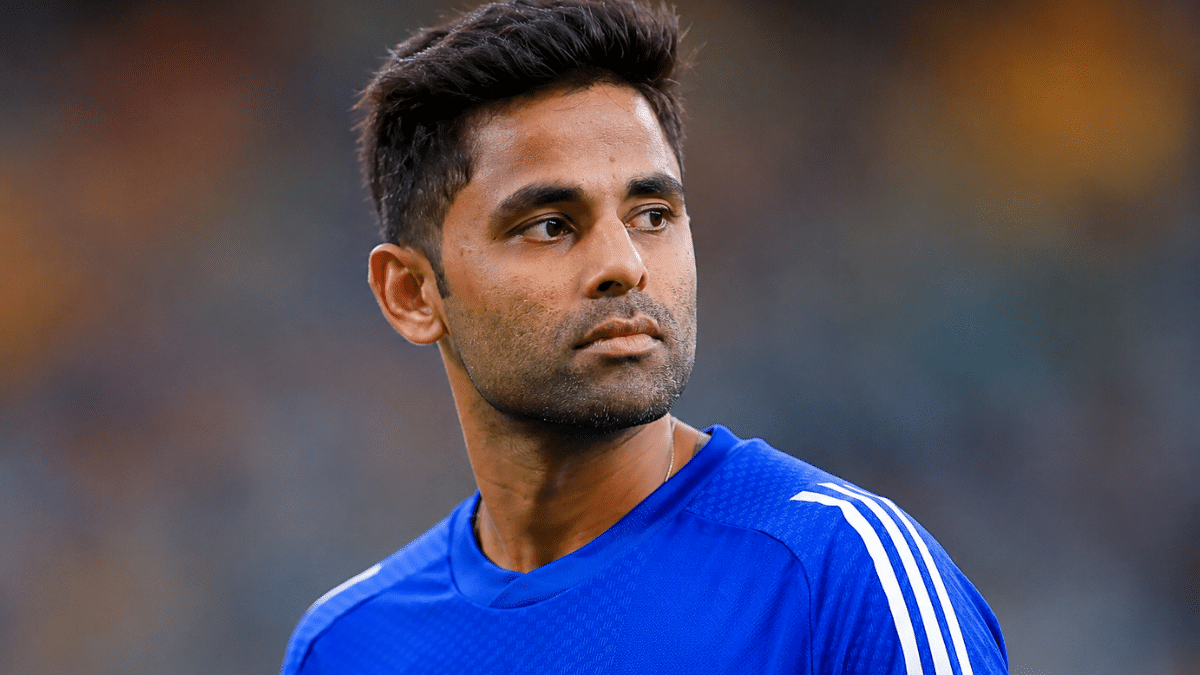
Suryakumar Yadav has called ODI cricket the most difficult format for a batter. Speaking on Aakash Chopra’s YouTube channel, he did not soften it or dress it up. He said it plainly.
“In my opinion, ODI cricket is the most difficult format for a batter, whether you bat lower down the order or anywhere else.”
Suryakumar Yadav, Aakash Chopra YouTube channel, August 2026
He went further. He explained that a batter walking in at number four might face a collapse at 0/2, while a number six could arrive at 24/4. In either case, the batter has to start like a Test match, respect the bowlers, build at a strike rate of 50 or 75, then shift to 100, and eventually push past 130 at the death like a T20.
What made this different from a standard press conference answer was the accountability that followed. He admitted he did not put in the work the format demanded. He said he knew he was likely to bat at five or six but still did not work hard enough to master the role.
He took full responsibility, saying where he put in the effort, he got the rewards, and where he did not, the results reflected it. The most revealing moment came when he described conversations at home.
His wife asks him whether he could have played more ODI cricket. His answer to her is the same as his answer to the public: he did not work hard enough. He framed it as a question of honesty, saying you have to look at yourself in the mirror every day, and you cannot lie to the person standing there.
View this post on Instagram
This was not the first time he acknowledged the struggle. In a PTI interview after India’s T20 World Cup victory in March 2026, he said ODI cricket was “one format that I never understood.” He described it as requiring three different ways of batting and admitted that despite trying his best, he could not crack it.
The Aakash Chopra interview goes deeper because it moves from admission to explanation to personal accountability. It is rare for an active international player to say publicly that a format defeated him because he did not do the work.
Insider Read
What Suryakumar described is the hardest thing in professional batting. It is not about skill. It is about calculation.
In T20 cricket, the equation is simple. The target is known, the overs are fixed, and the field restrictions give areas to attack from ball one. The mental mode is constant: aggression, risk, reward. One gear.
ODI cricket strips that away. A batter has to calculate the innings according to the match situation and the required run rate, and those calculations change every few overs. In the powerplay, the bowlers are fresh and the new ball moves, so the batter has to survive.
In the middle overs, the field spreads and the run rate needs managing, not forcing. At the death, the batter has to become a T20 player again. Three separate mental frameworks inside one knock.
Then there is the targeting. A batter has to identify which bowlers to go after for a big over and when to do it. Every bowling attack has a weak link, whether it is a spinner who turns it but cannot hold a length under pressure, or a seamer whose pace drops in the second spell.
The bowling side plays the same game in reverse. Captains rotate their bowlers according to a batter’s weakness. If someone struggles against spin through the middle overs, the captain holds his best spinner for that phase. If a batter is vulnerable against the short ball when set, the pace bowler comes back.
Both sides are calculating three or four overs ahead. In T20 cricket, you react. In ODI cricket, you plan.
That is the gap Suryakumar identified. His T20 instincts, the very thing that made him extraordinary in the short format, worked against him in the 50 over game. The impulse to attack is a strength in one format and a trap in another.
His last ODI was the 2023 World Cup final against Australia. He has not played the format since. India’s team management has reportedly not closed the door on recalling him for the 2027 World Cup in South Africa, but his own words suggest he understands exactly what it would take to return, and exactly why he fell short.
Also Read:
- India’s 15 for 2027 World Cup: Why Every Pick Was Made
- ICC Announces All 12 Venues for 2027 Cricket World Cup Across South Africa, Zimbabwe and Namibia
- Why the ICC ODI World Cup 2027 Super Series Creates a Two-Tier World Cup in Everything But Name
- Shubman Gill Reveals 2027 World Cup Planning With Kohli Has Already Begun
- Bhuvneshwar Kumar and the 2027 World Cup: Age Is Not a Disqualification