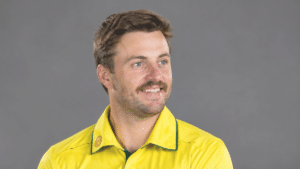
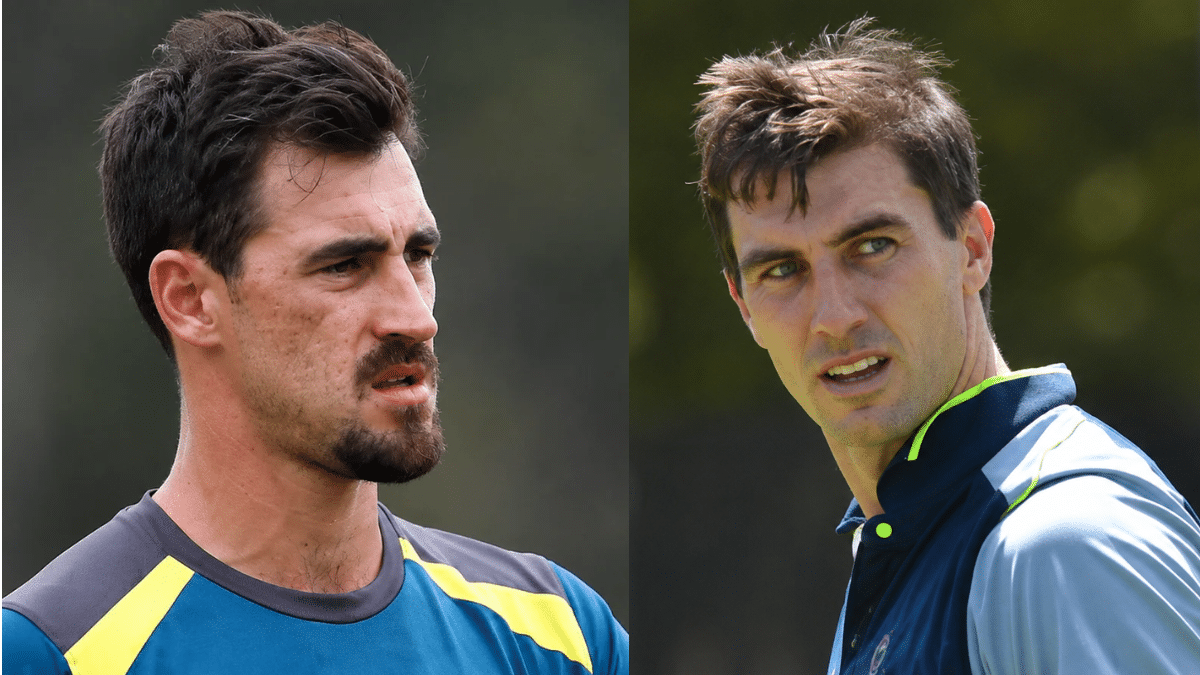
Mitchell Starc is the No. 1 ranked Test bowler in the world for the first time in his career. The 36-year-old reached the top of the ICC rankings on August 26, 2026, after a 10-wicket match haul against Bangladesh in Mackay.
He dethroned Jasprit Bumrah, who held the position since February 2024 and is currently sidelined from India’s Sri Lanka series with a knee injury.
Starc’s match figures of 10/51 (6/12 and 4/39) earned him Player of the Match and Player of the Series as Australia won by an innings and 51 runs inside two days. His first-innings five-wicket haul came in just 22 balls, the sixth-fastest fifer in men’s Test history.
His career-best rating of 872 points puts him 10 ahead of Bumrah (862) and 11 clear of Matt Henry (861).
The rankings tell you who is bowling well. They do not tell you what it costs a batter when there is nowhere to hide, or what it takes to keep five bodies operating at this level past 30.
| Rank | Bowler | Country | Rating |
|---|---|---|---|
| 1 | Mitchell Starc | Australia | 872 |
| 2 | Jasprit Bumrah | India | 862 |
| 3 | Matt Henry | New Zealand | 861 |
| 4 | Pat Cummins | Australia | 841 |
| 5 | Marco Jansen | South Africa | 825 |
| 6 | Kagiso Rabada | South Africa | 807 |
| 7 | Scott Boland | Australia | 804 |
| 8 | Noman Ali | Pakistan | 792 |
| 9 | Josh Hazlewood | Australia | 783 |
| 10 | Nathan Lyon | Australia | 731 |
Five Australian bowlers in the top 10. Half the list. Not since England placed six bowlers in the top 12 in 1958 has one country dominated the Test bowling rankings like this.
View this post on Instagram
What makes this different from past great attacks is not just talent. It is that Australia’s “spare” bowler is ranked higher than most countries’ first choice.
Scott Boland, the man who has spent much of his career as fourth seamer, holds the best Test bowling average in more than a century among bowlers with a minimum of 2,000 balls bowled: 62 wickets at 16.53.
“I’m playing with three of the best fast bowlers Australia has ever had, so I’m happy to be in behind them.”
Scott Boland
George Bailey, Australia’s chair of selectors, does not see Boland as a backup anymore.
“Scotty would never say it, but I think he’s mounting a strong case that when you use the words ‘the big three’, that he could be one of those.”
George Bailey, pre-Bangladesh series
This depth did not happen by accident. It was built through obsessive physical preparation across the entire group.
Starc has a red-light therapy sauna and a full recovery gym at home. He targets six times his body weight on mid-thigh pulls, arranges specific flights to protect sleep quality, and abstained from alcohol through the entire Ashes. His boots are custom-built with extra spikes, reinforced toe leather, and enhanced shock absorption.
“He’s a unicorn. He’s the best trainer, he’s very meticulous.”
Ross Herridge, Cricket Australia physical performance lead
Cummins has overhauled his gym work in his 30s, admitting his training has been “a lot better than potentially the previous five years.” Hazlewood does pre-match pool sessions for mobility. Boland installed a red-light therapy sauna at his home before Starc did.
Lyon, at 38, returned from a calf injury declaring he was “bowling the best I’ve bowled in about six years.” Australia’s system has eliminated the traditional six-week off-season. Year-round commitment, coordinated rest periods, and selective white-ball breaks keep five world-class bowlers available at the same time.
Insider Read
Against most attacks, a batter identifies the weaker end. Survive the danger bowler, score off the other. Against this Australian group, that calculation does not exist. Starc at 145kph from one end, Cummins or Hazlewood from the other, Boland with a 16.53 average when one tires, Lyon with over 550 Test wickets when spin is needed. There is no “see off this spell” option because the next spell is just as dangerous.
That relentlessness is not built on talent alone. It is built on five men in their 30s who treat preparation like a second career: red-light saunas, custom footwear, eliminated off-seasons, overhauled gym routines, pre-match pool work. The rankings reward the wickets. They do not show the thousands of hours in recovery rooms and home gyms that made those wickets possible.
Starc reached this point by changing one thing. As he explained earlier this year, the shift was entirely mental.
“Excuse my language, but it’s just been letting shit go. Whether it’s a good day, bad day, good over, bad spell, it’s done. Move on.”
Mitchell Starc
That simplicity has carried him to 445 Test wickets from 107 matches at 26.12. He surpassed Dale Steyn’s 439 during the Mackay Test to become the 10th-highest wicket-taker in Test history.
“When you’re 36 and you’ve been around for 16 years, you’d like to think you’ve improved or got better at something.”
Mitchell Starc
He is not thinking about rankings or records. He is thinking about the next series.
“I’d like to milk my body for all I can for Test cricket.”
Mitchell Starc, post-match, Mackay
Also Read:
Hazlewood 300 Test Wickets Australia
Jacob Bethell on Boland: Toughest Red Ball Bowler
Hazlewood Rested Ashes McDonald Told
Cummins on BBL, IPL Money Over Test Cricket
Australia Test Batting Crisis Darwin
Bangladesh First Test Win Australia