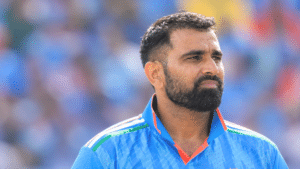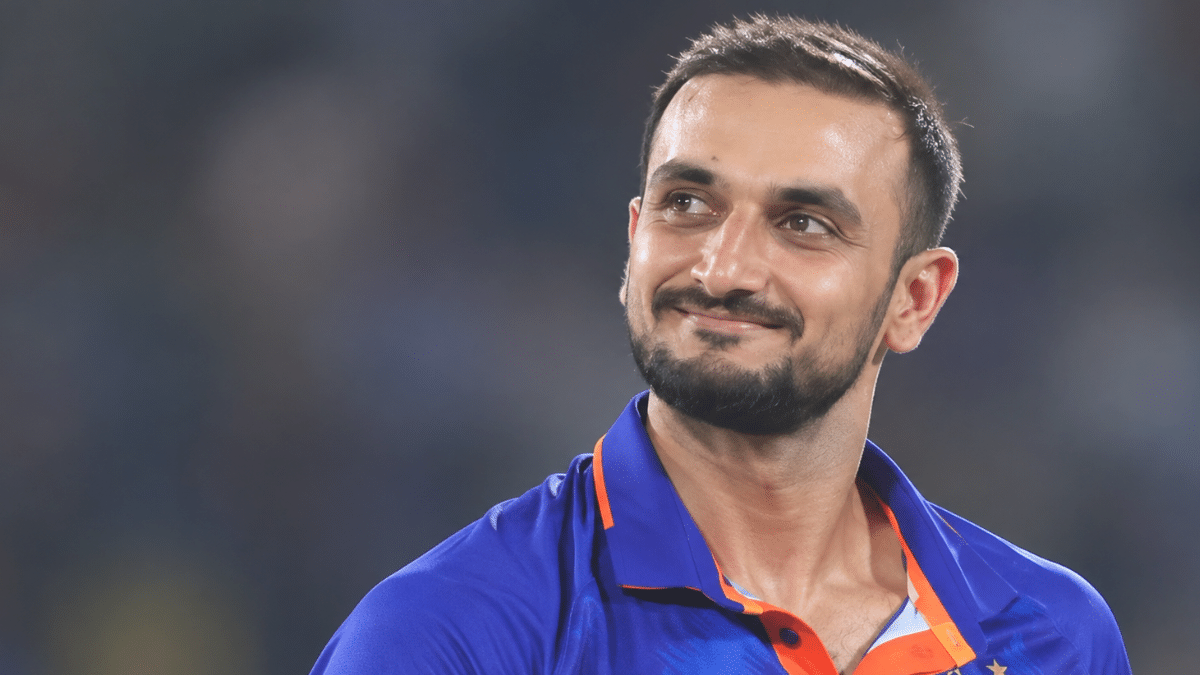

Jofra Archer has played 22 Tests. Kagiso Rabada has played 73. Both are 31. Both bowl north of 90 mph. Both debuted as teenagers for their national teams. The difference between them is not ability. It is availability.
Archer’s career in Test cricket reads like a list of what could have been. Rabada’s reads like a bowler who was allowed to do his job. The gap, 51 Tests and counting, is the clearest measure of what England’s management of their fastest bowler has cost them.
That cost is now becoming impossible to ignore, because for the first time, England appear to have found an answer.
The breakdown
Between 2020 and 2023, Archer’s body failed in sequence. A bone stress injury in his right elbow in 2020. Two elbow surgeries in 2021, three months apart. A stress fracture in his lower back in May 2022. A recurrence of the elbow stress fracture in 2023. Four different injuries across four consecutive years, each one ruling him out for months.
He missed the 2021 Ashes. Missed the 2022 T20 World Cup. Missed the 2023 Ashes at home. Missed the 2023 50-over World Cup in India. Four major tournaments in a row, gone. England’s fastest bowler sat in rehab while the team played without him.
When he finally returned to Test cricket in July 2025, it had been over 1,500 days since his last red-ball appearance. He came back at Lord’s against India and dismissed Yashasvi Jaiswal with his third delivery. Bowled 10 overs for 22 runs at an average pace of 89.8 mph. The talent had not gone anywhere. It never had.
He played three Ashes Tests that winter. Took 5-53 in Adelaide. Bowled at 94 mph. Then a left side strain ended his tour with two matches still to play.
The pattern had not changed. Brilliant, then broken.
The quartet
Something shifted against Pakistan in August 2026. For the first time, England fielded Archer alongside Ollie Robinson, Josh Tongue, and Gus Atkinson in the same Test. Four genuine seamers, all fit, all bowling with pace and hostility. Pakistan were dismissed for 171, 135, and 110 across the series.
Archer took 3-26 in the first Test, bowling at 94 mph. But the numbers were secondary to what he said afterwards.
“I could play until I’m 40 at this rate.”
Jofra Archer, after Pakistan 1st Test, August 2026
“Each day it will be someone else’s turn. Everyone was relentless, everyone wants wickets, and it feels like no one is ever going to be overworked because everyone shares the overs out.”
Jofra Archer, after Pakistan 1st Test, August 2026
He added that the system allows bowlers to rotate in real time. If someone feels tired, they tell the captain and get swapped out. They recover. They come back fresh. No bowler carries the attack alone.
This is the first time in Archer’s England career that a structural solution has been applied to his workload. Previously, England’s approach was reactive: rest him, hope he recovers, throw him back in. The quartet is proactive. It distributes overs by design, not by desperation.
The Rabada standard
While England spent five years trying to keep Archer on the field, Rabada was playing Test cricket. Consistently. Across conditions. Through a workload that would have ended Archer’s series three times over.
Rabada’s record tells the story. 73 Tests. 340 wickets at 22.03. Seventeen five-wicket hauls. He played through South Africa’s rebuilding years, bowled in India, Australia, England, and the Caribbean. He was the leading wicket-taker in the 2018 home series against Australia with 23 wickets at 19.26. He took 9 wickets in the 2025 World Test Championship final as South Africa won the trophy.
He missed time too. A back injury ruled him out of the 2018 IPL. A rib injury kept him out of the India tour in November 2024. A recreational drug suspension sidelined him in early 2025. But the critical difference: Rabada’s absences were measured in weeks. Archer’s were measured in years.
South Africa’s system never asked Rabada to do it alone. They had Lungi Ngidi, Marco Jansen, Anrich Nortje, Gerald Coetzee, and Corbin Bosch at various points. The depth existed. The rotation was built in. Rabada could bowl at full tilt knowing there was backup.
The observation from the video cuts to the core of it: England managed Archer in short bursts. South Africa managed Rabada over five years. One approach produced 73 Tests. The other produced 22.
The cost in real terms
The gap between Archer’s talent and his output is quantifiable.
| Series missed | Year | What happened without him |
|---|---|---|
| Ashes (Australia) | 2021-22 | England lost 4-0 |
| T20 World Cup (Australia) | 2022 | Eliminated in semi-final |
| Ashes (England) | 2023 | England lost 2-1, failed to regain the urn |
| 50-over World Cup (India) | 2023 | Eliminated in semi-final |
| India Tests (first two) | 2025 | England lost both before Archer returned |
| Ashes (final two Tests) | 2025-26 | England lost series after his withdrawal |
Six major campaigns. In every one, England entered without their fastest bowler or lost him midway through. The John Turner retirement at 25 from back injuries shows this is not an isolated case. England’s fast bowling pipeline has a structural fragility that goes beyond one player.
Rabada, in the same period, played the WTC final, toured India, Australia, and Bangladesh, and was available for virtually every series South Africa needed him for.
Insider Read
The difference between Archer’s injuries and Rabada’s availability is not about genetics or luck. It is about systems.
When a fast bowler breaks down repeatedly, the instinct is to protect him by reducing his cricket. England did that with Archer for four years. White-ball only. Managed returns. Careful build-ups. It did not work because rest is not a system. Rest is the absence of a system. What Archer needed, and what he finally has with the pace quartet, is a structure where bowling 15 overs in a day is the maximum rather than the minimum expectation. The moment he described telling his captain he needs a break and actually getting one, without guilt, without the team collapsing, that is the moment England caught up to what South Africa had with Rabada all along.
Where both stand now
Archer, for the first time in his career, sounds like a fast bowler who believes his body will hold. The quartet has given him something no amount of rehab could: confidence that the system will not break him.
Rabada, meanwhile, is nursing a grade 3 right hamstring tear suffered during winter training in August 2026. Cricket South Africa confirmed he is ruled out of the ODI series against Australia and is racing to be fit for the Test series starting October 9. Allan Donald, his Lions bowling coach, estimated 9 to 10 weeks of recovery.
The roles have reversed, at least for now. The bowler who was always available is unavailable. The bowler who was never available believes he can play until 40.
Neither outcome is permanent. Hamstrings heal. Side strains return. But the system Archer now operates in, four seamers sharing the load under a captain willing to rotate, is the closest England have come to building what South Africa built around Rabada years ago.
The 51-Test gap will never close. What matters is whether it stops growing.
Also Read: