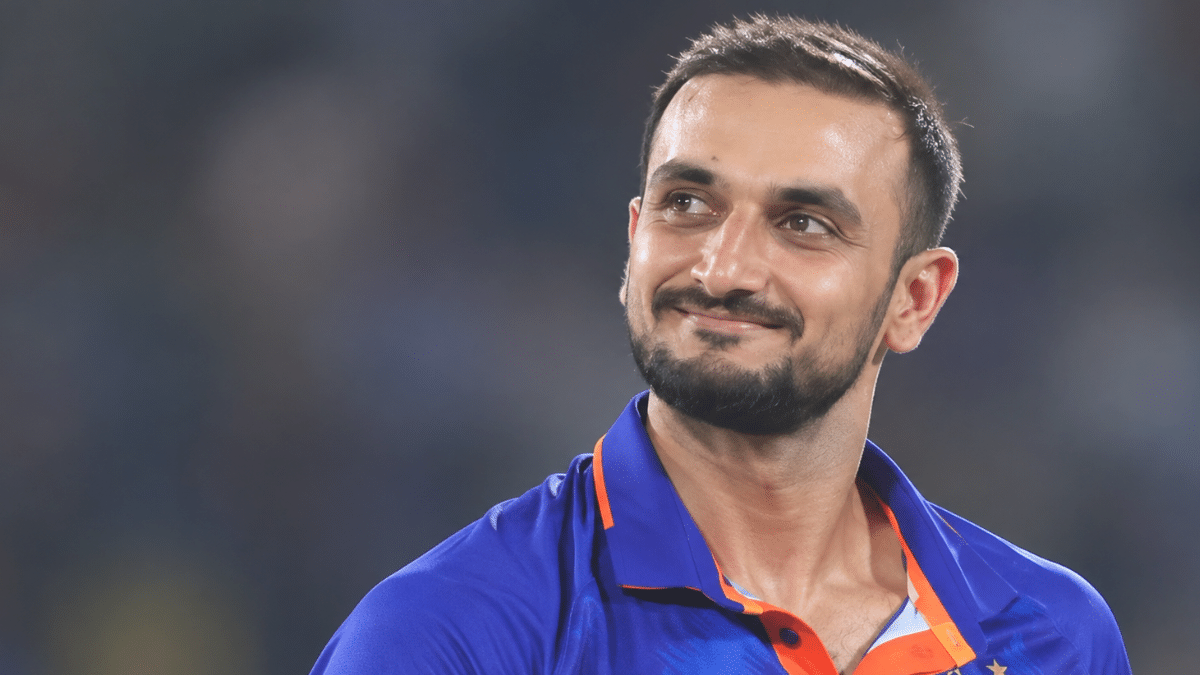

Hardik Pandya was dropped from the Baroda U-17 team after scoring 900 runs in a season because his coaches labeled him with an “attitude problem.” The India all-rounder said he did not even understand the word “attitude” at the age of 16.
Pandya made the statement in a recent interview, revisiting a chapter of his early career that he has spoken about multiple times over the years but never with this level of specificity. He claimed the second-highest scorer in his team that season managed only 200-300 runs. The gap in performance made no difference to the selectors.
“When I was 16 I got dropped from a team after scoring 900 runs and the second best is 200-300 runs.”
Hardik Pandya, interview, July 2026
The pattern was not limited to one season. Pandya was dropped repeatedly from Baroda age-group squads between U-13 and U-17. In a 2017 interview with Indian Express, he described himself as “just an expressive child” who did not like to hide his emotions. In a separate conversation on India Today Inspiration, he recalled someone informing his brother Krunal that Hardik had an “attitude problem.” His response at the time was confusion. He said he was not educated enough at that age to even understand what the accusation meant.
The consequences were not just cricketing. Both Hardik and Krunal were dropped, and the Rs 35,000 annual stipend they earned from age-group cricket stopped. For a family already under financial strain after their father’s business collapsed, that money mattered. Reports have documented that the Pandya brothers survived on Maggi noodles and vada pav during this period, travelling to training on a second-hand Activa.
“I always get dropped not my runs because of my attitude or very honestly I didn’t even know what was attitude.”
Hardik Pandya, interview, July 2026
I always get dropped not my Runs because of my attitude 🤯
“I always get dropped of not my Runs because of my attitude or very honestly I didn’t even know what was attitude so someone said that you”.
“When I was 16 I got dropped from a team after scoring 900 Runs & the second… pic.twitter.com/4Z1rzjRQQN
— VIKAS. (@Vikas662005) July 31, 2026
Pandya’s response to the exclusions was total isolation. Between the ages of 17 and 19, he cut himself off from the non-cricketing world entirely. No social connections outside the game. No distractions. He has described those three years as the period that shaped everything that followed.
The turnaround began around 2013 when a Baroda coach told him to stop bowling leg-spin and switch to fast bowling. That decision rebuilt his career from the ground up. He made his Ranji Trophy debut for Baroda later that year, played a central role in Baroda’s Syed Mushtaq Ali Trophy title in 2013-14, and was scouted by Mumbai Indians’ John Wright in 2014. MI picked him at his base price of Rs 10 lakh ahead of IPL 2015.
The Boy Baroda Dropped Now Has 200 International Caps
What followed is well documented. Pandya made his India T20I debut in January 2016, played a defining last over against Bangladesh in the T20 World Cup that year, and became a permanent fixture across white-ball formats. He captained Gujarat Titans to the IPL title in their debut season in 2022. He bowled the final over to win India the T20 World Cup in 2024. He was part of the Champions Trophy-winning squad in 2025. He has over 200 international caps across formats.
The same expressiveness that Baroda’s age-group coaches called an attitude problem is now described differently. Axar Patel, after the 2025 Champions Trophy final, said Pandya is the most confident person in the Indian team when everyone else is under pressure. Kieron Pollard, who played alongside him at Mumbai Indians, recalled being struck by Pandya’s refusal to be shy or subdued in a dressing room full of established stars.
Pandya himself has drawn a line he believes matters. He said he has always maintained his “confidence line” and never crossed it. The distinction he makes is between being confident and being arrogant. His position, stated repeatedly across interviews over nearly a decade, is that coaches and selectors confused the two when he was a teenager.
The claim of 900 runs has a slight discrepancy with earlier reporting. The SportsRush, referencing the India Today Inspiration interview, reported the figure as 800 runs. Whether the exact number is 800 or 900, the broader point is not in dispute: Pandya was comfortably the best performer in his age group in Baroda and was still excluded. Multiple profile pieces from Zee News, CricketAddictor, and CREX have independently confirmed the pattern of repeated drops from age-group teams due to what was characterized as indiscipline and attitude.
Insider Read: What 900 Runs at U-16 Actually Means
When a 16-year-old scores 900 runs in a domestic age-group season and the next best in his team is sitting at 200-300, the gap tells you something specific. That player is not competing with his teammates. He is competing with the level itself. He has outgrown it. Every bowler in the opposition has been worked out. The technical and mental difference between that player and the rest of the squad is not a margin. It is a gulf.
This is exactly the situation that makes certain coaches uncomfortable. A player at that level does not need much coaching. He does not need to be told where his off stump is. He does not need a session on playing the short ball. He is already solving problems on his own in the middle. That independence is the issue. The coach’s role in that player’s development becomes minimal, and in age-group cricket, where coaches often derive their authority from being needed, a player who does not need them becomes a problem to manage rather than a talent to develop.
The “attitude” label in Indian age-group cricket is rarely about actual misconduct. It almost never means a player refused to train or disrespected the game. It usually means the player was expressive, showed emotion after a dismissal, questioned a tactical decision, or carried himself with a visible sense of self-belief that the coaching setup interpreted as arrogance. At senior level, that same behavior is called competitive intensity. At U-16 level, it gets you dropped.
The system rewards compliance at the junior level and then demands personality at the senior level. The players who survive this contradiction are the ones who either learn to mask their nature until they reach a level where it is valued, or the ones who are too talented to be ignored forever. Pandya was the second kind. But the three years he lost, the financial damage to his family, and the emotional toll of being punished for performing are real costs that do not disappear just because the story eventually turned out well.
Sources:
- Hardik Pandya, X (via @Vikas662005), July 2026
Also Read: