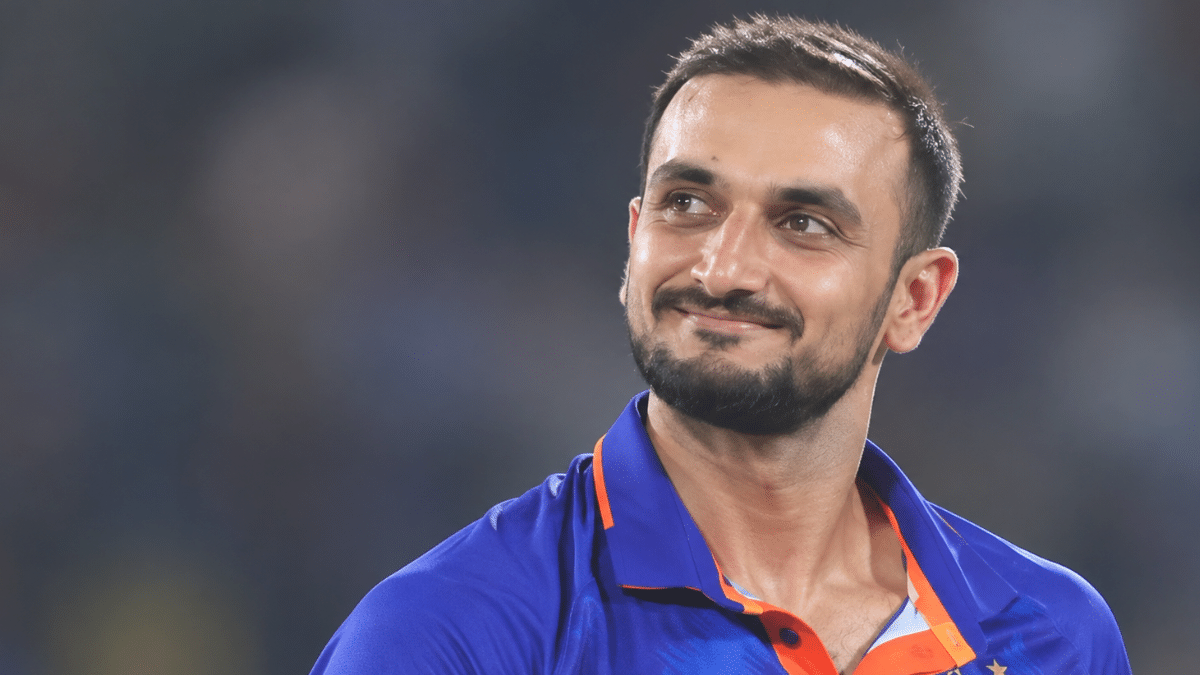

JJ Basson took 11 wickets for 99 runs on first-class debut. He is 18. He is still in school.
The man who coached Kagiso Rabada through the same Lions system says he has seen this before, exactly once.
Basson’s 7/62 and 4/37 for DP World Lions against Boland at the Wanderers are the best match figures by a South African seamer on first-class debut. He dismissed Gavin Kaplan, last season’s leading run-scorer, and Neil Brand, a former Proteas captain, twice each.
He did it in the opening round of the CSA First Class Series, in a squad missing eight players to national call-ups and injuries. He would not have played with a full squad available.
The Lions batted first. Ryan Rickelton scored an unbeaten 113, his 19th first-class century, building a platform ahead of the Australia series. But the match belonged to the teenager bowling from the Corlett Drive End.
Basson’s first over was nervous. Two boundaries. Then something shifted.
In his second spell, he took four wickets in 14 deliveries. His high arm action, nearly 1.9 metres off the ground, extracted bounce that Boland’s top order could not handle. Kaplan edged to second slip for a duck. Brand’s stumps cartwheeled.
By the time Boland were 90 for 6, Basson had taken all six.
Lehan Botha rescued Boland with 170, including 20 fours and 5 sixes, dragging them to a first-innings lead of 34. It did not matter. Basson came back in the second innings and took 4/37.
Kaplan fell lbw. Brand fell lbw. Ruan Terblanche’s unbeaten 66 saved Boland from defeat, and the match ended in a draw.
The numbers alone would have been enough to make news. Allan Donald made them mean something more.
“We’ve witnessed something quite rare and special the last few days. For a kid that young, the maturity levels and skill levels for an 18-year-old are crazy.”
Allan Donald, Lions bowling coach, after Lions vs Boland, September 2026
Donald took 330 Test wickets for South Africa. He coached Rabada through the Lions system from the moment the right-armer arrived as a teenager in 2013.
In February 2015, Rabada took 9/33 against the Dolphins, the best figures in franchise-era South African cricket. Donald watched that happen from the same coaching box he stood in last week.
“What a find this kid is. It’s like when I saw KG [Rabada] for the first time and he rock and rolled at the Adelaide Oval in a T20I against Australia. I just knew. Every now and again, one of these kids comes along and they are just a find that you want to nurture.”
Allan Donald, Lions bowling coach, September 2026
Donald does not make this comparison casually. When a man who has spent a decade identifying and developing fast bowlers for the Lions says “I just knew,” he is describing a professional pattern he has recognized exactly twice.
JJ Basson is yet to finish school, yet this week claimed a stunning 11 for 99 for Lions against Boland at the Wanderers – the best by South African seamer on first-class debut 🔥
His sensational start had Proteas legend Allan Donald drawing comparisons with Kagiso Rabada 🤩 pic.twitter.com/Zt6uN5qMkU
— Cricinfo (@cricinfo) September 14, 2026
What Basson Does That Most 18-Year-Olds Cannot
Left-arm seamers at 18 bowl short. They rely on bounce and angle. They pitch back of a length because it feels safe and the ball does something off the surface without demanding precision.
Basson bowls full. Consistently in the high 130s km/h, touching the early 140s, he attacks the stumps with a length that invites drives and punishes them. His release point, from that 1.9-metre frame, creates steep bounce even on a full length.
The signature delivery is the one that swings back into right-handers. A left-arm seamer who can move the ball away from right-handers has angle working for him naturally. One who can bring it back has a weapon that most bowlers twice his age never develop.
Basson does both. That is not raw talent alone. That is technical understanding of wrist position, seam presentation, and release that belongs to a bowler far older than a matric student carrying school books to the Wanderers.
This was not a one-match arrival. In July, Basson took 7/73 against England in a Youth Test, the best bowling figures by a South African in Youth Test history. He surpassed Makhaya Ntini’s previous record of 6/53.
His match figures of 10/123 made him only the second South African to take ten wickets in a Youth Test, after Renier Munnik’s 10/99.
At the U19 World Cup in January, he took 5/23 against West Indies, three of them in a single over. South Africa lost by 55 runs despite his spell.
In 2024, playing the Jozi Cup for Noordheuwel, he took 9 wickets for 1 run in 19 balls against Swaneville U18.
The trajectory is not a straight line from schools cricket to first-class cricket. It is a steep diagonal. Paarl Royals signed him as an under-23 player for the SA20.
He shared a dressing room with Temba Bavuma last week. Michael Kruiskamp, another SA U19 left-arm seamer, made his first-class debut the same weekend at Newlands for Western Province. South Africa’s next generation of fast bowling is not arriving one at a time.
The Lions will manage his workload carefully. In the short term, he has to finish writing his matric exams. He brought his school books to the ground every day of the Boland match, studying between sessions.
The balance between protecting a teenager’s body and letting a fast bowler bowl is the oldest tension in South African cricket. Donald, who managed Rabada through the same transition, knows the cost of getting it wrong.
Basson’s 11/99 is a number. What Donald saw from the coaching box is a judgment.
The two do not always align. This time, they point in the same direction.
Also Read: