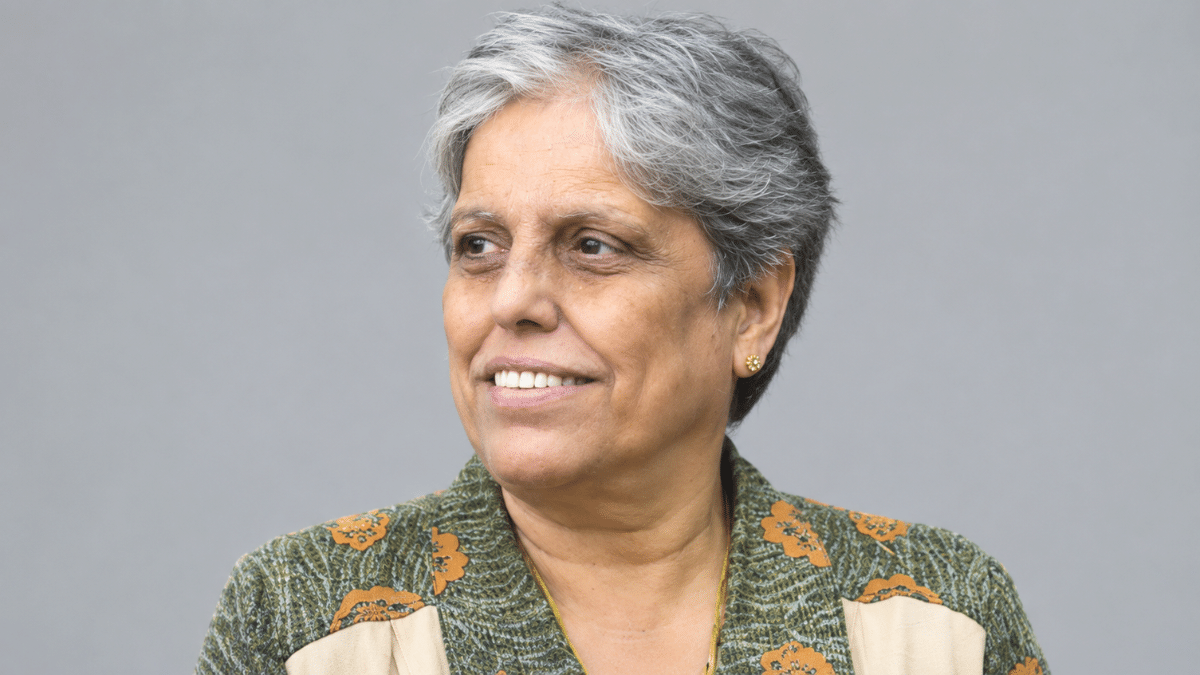
Diana Edulji spoke to Mid-Day on September 17, 2026, the same day Harmanpreet Kaur walked into the Asian Games in Aichi-Nagoya as India’s captain. Four days earlier, Harmanpreet had led India to their eighth Women’s Asia Cup title, their fourth under her captaincy, a record. Twelve days before that, she became the first cricketer, male or female, to captain a national side in 150 T20 Internationals.
Edulji’s message was not about any of that.
“We are holding back Smriti Mandhana for a long time. By the time the next World Cup comes along, Harman will be nearing 40, so let’s give a good run to Smriti and look at two youngsters as vice-captains. My humble request to Harman would be to let people ask why and not why not.”
Diana Edulji, Mid-Day, September 17, 2026
This is not a one-off comment. Edulji, the first Indian woman inducted into the ICC Hall of Fame, has been building this case for three months. Each statement has been louder than the last, and each time, Harmanpreet has responded with trophies, not words. What cameras and statistics capture is the trophies. What they miss is what captaincy actually takes out of a batter’s body and mind at 37, and why Edulji, who has been there, sees something the scorecards do not show.
The campaign started on June 30, after India’s early exit from the T20 World Cup in England, their second consecutive group-stage elimination. Edulji called Harmanpreet “stagnated” and said India needed “someone with a few better ideas, especially in terms of strategy.” She added, “There’s too much of a comfort zone now.”
Three weeks later, at a Maharani Trophy event in Bengaluru, she escalated. “We cannot keep Smriti waiting in the wings for so long,” she said, proposing Mandhana as captain in T20Is and ODIs, with Harmanpreet continuing only in Tests. She also proposed split coaching across formats.
Then came September 3. Mandhana scored 124 off 64 balls against Hong Kong in the Asia Cup, breaking Mithali Raj’s all-time record of 10,868 international runs. Edulji’s response was immediate.
“I congratulate Smriti Mandhana on becoming the leading run-getter in women’s internationals. I feel that it’s high time that the national women’s selection committee, led by Amita Sharma, appoints Smriti as the new captain in all three formats of the game. Harmanpreet Kaur can continue to play as a senior player in the side.”
Diana Edulji, Times of India, September 4, 2026
From T20I captain to all-format captain in under ten weeks. The demand grew even as the evidence against it piled up.
Number 1️⃣8️⃣ with her 1️⃣8️⃣th Hundred 😎
Vice-captain Smriti Mandhana topping the charts 💯#TeamIndia | #WomensAsiaCup | #INDvHK pic.twitter.com/amvoLOKuMl
— BCCI Women (@BCCIWomen) September 3, 2026
Harmanpreet’s record since October 2025 makes the captaincy debate uncomfortable for those pushing change. She led India to their maiden ODI World Cup title, beating South Africa by 52 runs in the final. She became the most successful Asia Cup captain in women’s cricket history with four titles. Her milestone of 150 T20I captaincies is a number no man or woman in international cricket has reached. She received the Padma Shri in 2026.
The BCCI has shown no appetite for change. After the T20 World Cup exit, selectors retained Harmanpreet as captain for the Asian Games, citing “experience and stability.” Her squad for Aichi-Nagoya is largely unchanged. Mandhana remains vice-captain.
But Edulji’s argument is not really about what Harmanpreet has done. It is about what comes next.
“𝐋𝐞𝐭 𝐩𝐞𝐨𝐩𝐥𝐞 𝐚𝐬𝐤 𝐰𝐡𝐲 𝐚𝐧𝐝 𝐧𝐨𝐭 𝐰𝐡𝐲 𝐧𝐨𝐭” 👀
~ Diana Edulji weighs in on India’s captaincy transition 🗣️#CricketTwitter pic.twitter.com/WEMehqztQM
— Female Cricket (@imfemalecricket) September 17, 2026
Mandhana’s credentials are no longer theoretical. She is the all-time leading run-scorer in women’s international cricket with over 10,880 runs and 18 centuries. She scored 213 runs across five Asia Cup matches. She captained Royal Challengers Bengaluru to back-to-back WPL titles in 2024 and 2026, battling through a high fever in the 2026 final. She has led India before, briefly in T20Is during 2019, and has been vice-captain for years. In the Asia Cup final itself, she scored 59 alongside Shafali Verma’s 68, the pair adding 129 for the opening wicket in India’s 183/5.
Edulji also suggested building the next layer of leadership beneath Mandhana. “Right now, we can have Jemimah (Rodrigues) or Shafali (Varma) as the vice-captain, and train them for the bigger responsibility,” she told Mid-Day.
The succession planning math is straightforward. The next ODI World Cup is in 2029, expanded to ten teams. Harmanpreet will be nearly 40. Mandhana will be 32. If the transition starts now, India’s next captain gets three years to grow into the role with major tournaments ahead.
Insider Read
Edulji said something in July that got less attention than her headline calls. “I believe Harmanpreet is finding it difficult. Her game is getting affected, so let her have a free hand as a batter.”
That is a statement only a former captain would make with such certainty. At 37, captaincy is not just a title. It is a second job running parallel to your batting. You are setting fields between deliveries, rotating bowlers based on matchups you are calculating in real time, managing younger players who need reassurance after a dropped catch or a poor over. Your body is already working harder than it did at 28 just to maintain fitness. Your reflexes are a fraction slower. Your recovery between matches takes longer. And on top of all of that, you are expected to bat with the same freedom as someone whose only job is to score runs.
The toll is invisible on the scorecard but obvious in the dressing room. When Edulji asks Harmanpreet to “let people ask why and not why not,” she is invoking something every player who has captained past their peak understands. The best exits happen when the question is “why did she stop?” not “why is she still going?”
Harmanpreet Kaur has earned every right to decide her own timeline. She won India their first World Cup. She has broken records that may stand for decades. The question Edulji is asking is not whether Harmanpreet deserves to captain. It is whether India can afford to wait until the answer becomes obvious.
Also Read: