
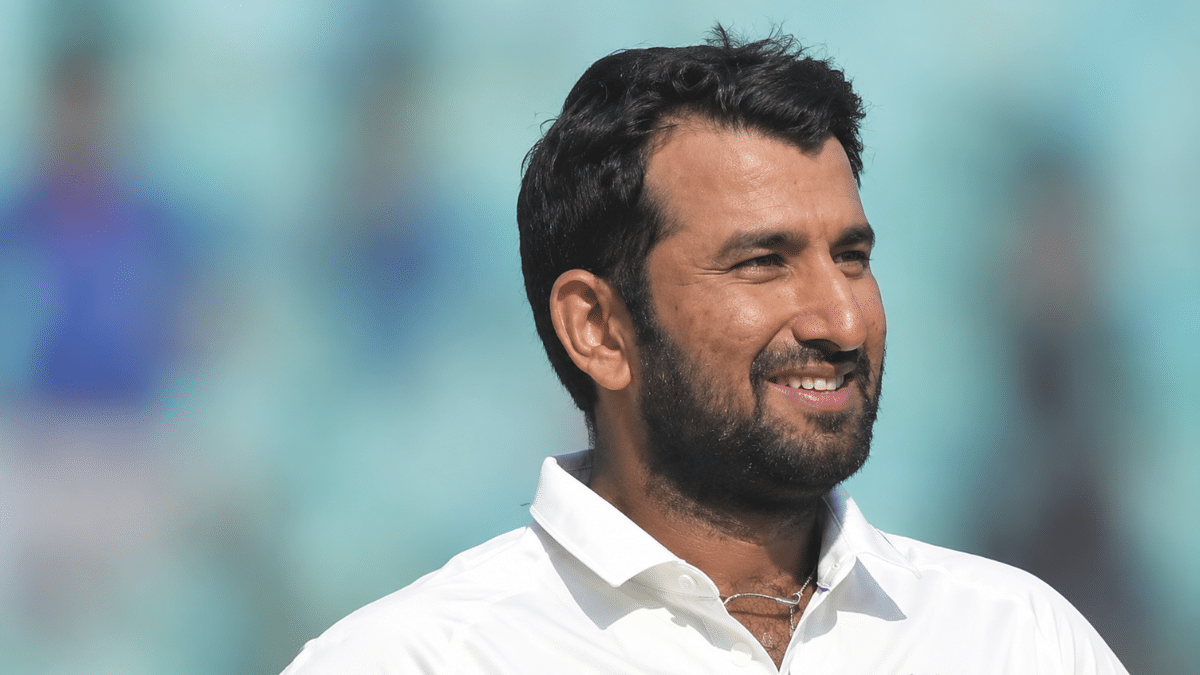
Tim Paine did not pick Virat Kohli. He did not pick Rohit Sharma. When asked which Indian batter was the hardest to dismiss during his captaincy, the former Australia captain named Cheteshwar Pujara without hesitation.
“Cheteshwar Pujara. He was hard to get out. He had great concentration and discipline and was tough. He used to irritate us.”
Tim Paine, interview with Times of India, September 22, 2026
Paine made the admission from the CAP-Siechem Stadium in Puducherry, where he is coaching Australia A on their tour of India ahead of the Border-Gavaskar Trophy. The timing adds weight. He is preparing Australia’s next generation for Indian conditions, and the batter who troubled his generation the most was not a stroke player. It was the one who refused to play strokes.
What makes Paine’s answer significant is that he is not alone in it. Four days earlier, Pat Cummins said the same thing on a Prime Video Sport video when asked to name his toughest opponent from each major cricket nation.
“India, I’m going to say Pujara. He’s really hard to get out. It’s like death by a thousand paper cuts. Happy to face 100 dot balls if he wanted to. He’s not going to give you a chance.”
Pat Cummins, Prime Video Sport, September 18, 2026
Australia’s former captain and their current one, independently and within days of each other, arrived at the same answer. Neither picked Kohli. Neither picked Rohit. Both picked the batter who retired in August 2025 with fewer headlines than either.
The numbers confirm what Paine and Cummins felt. Pujara scored 2,074 runs against Australia across 25 Tests at an average of 49.38, with five centuries and 11 fifties. In Australia specifically, he made 993 runs in 11 Tests at 47.28.
But the stat that defined his impact was balls faced. In the 2018-19 Border-Gavaskar Trophy, Pujara faced 1,258 deliveries, the only batter on either side to cross 1,000. He scored 521 runs at 74.42 with three centuries. India won that series 2-1, their first in Australia in 71 years.
In 2020-21, when India won again without Kohli for three of four Tests, Pujara faced 928 deliveries. He scored 77 off 205 balls in Sydney and 56 off 211 balls in Brisbane. India won that series too.
Paine himself acknowledged this on The Grade Cricketer podcast: “A lot of people talk about Rishabh Pant in the last series in Australia, but the guy who won them the series was Pujara. He wore us down, he wore our fast bowlers down.”
Insider Read
The word Paine used was “irritate.” It is a specific choice. Frustration in Test cricket usually comes from a batter who punishes bad balls. Pujara did not punish bad balls. He left them. He blocked them. He turned singles into dead play. He made good balls feel wasted because the scoreboard barely moved, and he made bad balls feel worse because they did not cost him his wicket either.
The cost was physical. Fast bowlers operate on intensity. They need wickets to justify the energy they spend. Pujara denied them that return over and over. Across two series in Australia, he faced 2,186 deliveries. That is not batting. That is attrition. The longer he stayed, the more Australia’s fast bowlers had to dig into reserve spells. By the fourth and fifth days, the toll showed.
Paine credited Cummins with eventually solving the puzzle: “Pat Cummins finally figured him out a bit and got him caught behind eventually.” Cummins dismissed Pujara eight times across their careers. The caught-behind method worked because Pujara’s discipline outside off stump, his greatest strength, also created a repeatable line of attack for a bowler patient enough to exploit it.
That patience, a fast bowler willing to match a defensive batter ball for ball, is rare. It is also the reason Cummins called the experience “death by a thousand paper cuts.” The contest was mutual endurance.
Paine is now in Puducherry coaching players who may face India in the next Border-Gavaskar Trophy. He noted that Indian wickets have changed: “The wickets have become hard for batting on in Test cricket in the last decade, spinning a lot more than what they were back then.” Pujara thrived in those conditions. The question for Australia’s next generation is whether anyone on India’s current roster will test them the same way.
Pujara finished his career with 7,195 runs in 103 Tests at 43.60. He retired in August 2025. A year later, the captain and the bowler who faced him most are still talking about what it felt like.
🚨Pujara used to irritate us – Tim Paine recalls Australia’s biggest headache🤯
Q: Which Indian batter was hardest to dismiss during your captaincy?
Paine :🗣️ Cheteshwar Pujara. He was hard to get out. He had great concentration and discipline and was tough. He used to irritate… pic.twitter.com/OPCqQCeCSw
— Akshat (@Cricketmythos) September 22, 2026
Also Read: