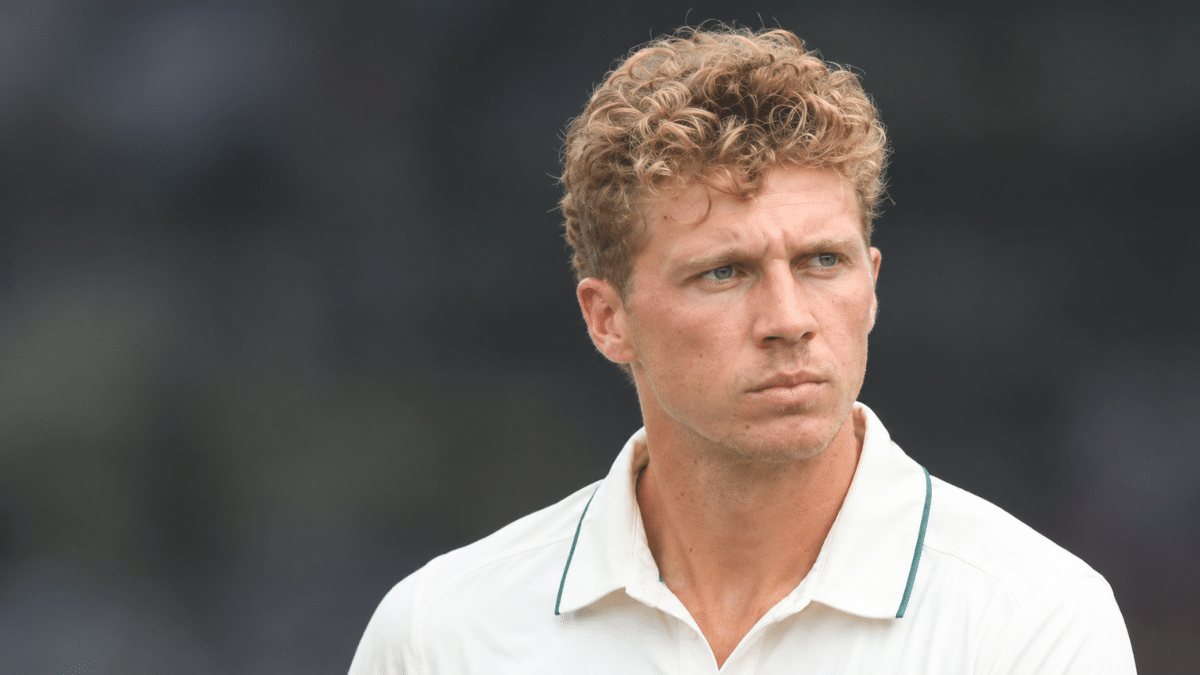

The US Civil War killed cricket in America, not anti-British sentiment. Historian Tom Holland argues that the practical demands of army life made baseball the easier choice, and the sport never recovered.
The common explanation for why America stopped playing cricket is that Americans rejected the game because it was British. Independence meant dumping tea and dumping cricket along with it. Tom Holland, the British historian, bestselling author, and amateur cricketer, disagrees.
“With America it wasn’t so much that they stopped playing cricket because it was seen as British… 1844 is obviously decades after the war of independence. I think it’s the civil war that kills it off because you have great armies who need to amuse themselves and it’s difficult to prepare a cricket pitch. It’s much easier to just to baseball… more suited to kind of rough and ready games.”
Tom Holland, YouTube interview, 2026
Holland’s timeline makes the anti-British theory difficult to sustain. The first ever international cricket match in history was played between the USA and Canada in Manhattan in September 1844, nearly seven decades after independence. Around 20,000 spectators showed up. Bets totalling $120,000, roughly $1.5 million in today’s money, were placed on the outcome. This was not a country rejecting a British sport. This was a country that loved cricket.
By the late 1850s, cricket was arguably the most popular team sport in America. Porter’s Spirit of the Times estimated nearly 6,000 cricketers lived within 100 miles of New York City. Philadelphia was the heartland. The Clipper reported in 1859 that “every boy in Philadelphia, who plays ball at all, knows cricket thoroughly.” Close to 1,000 clubs were active across the country. When an English touring side led by George Parr arrived in 1859, an estimated 5,000 people packed the ground at Hoboken to watch them play a combined USA eleven. Extra ferries were scheduled across the Hudson to handle the crowds.
Then the Civil War began in 1861. And Holland’s argument is that this is where cricket died.
Why Baseball Survived the Battlefields and Cricket Did Not
The war did not ban cricket. Both Union and Confederate armies recommended it as recreation. But soldiers needed to move constantly, setting up camp in unfamiliar locations for days or sometimes hours. Baseball needed almost nothing. A bat, a ball, and four gunnysacks thrown on a patch of ground. A few hours at most. Cricket needed a carefully prepared pitch with a rolled, flat surface. It needed proper equipment that was difficult to source domestically since most cricket gear was imported from England during the war years. It needed days, not hours.
Beadle’s Dime Base-Ball Player, a 40-page rule book published in 1860, had already sold 50,000 copies before the war started. Soldiers from both sides carried it into the camps. Baseball spread through the armies the way songs and card games did: fast, cheap, requiring nothing but open ground and willing bodies.
The numbers after the war tell the rest of the story. By the early 1870s, baseball had 2,000 clubs, 100,000 players, and 250,000 regular spectators. Cricket had Philadelphia and not much else.
The war also inflamed anti-British feeling in the North, but for a specific reason Holland does not mention. Many New Yorkers and northerners resented Britain for continuing to buy Southern cotton during the conflict. Cricket’s association with England became a liability at the exact moment baseball was becoming the shared experience of millions of returning soldiers. Harry Wright, the son of English cricket professional Samuel Wright, saw the shift firsthand. He had played cricket for the combined USA side against Parr’s tourists in 1859. After the war, he moved to Cincinnati, built the first all-professional baseball team, and led them to an undefeated 57-0 season in 1869. He was later inducted into the Baseball Hall of Fame.
Cricket did not disappear overnight. In 1878, 15,000 people in Philadelphia watched a local eleven hold the touring Australians to a draw. Philadelphia beat the Australians outright fifteen years later. But the sport never regained a national foothold. A.G. Spalding, the sporting goods magnate and baseball’s most powerful promoter, drove the cultural separation further by framing baseball as democratic and American and cricket as slow, aristocratic, and foreign. The Imperial Cricket Conference sealed cricket’s exclusion from international competition in 1909 by restricting membership to countries within the British Empire.
Insider Read: What Holland’s Argument Means if You Have Played the Game
Holland is right, and only a cricketer would understand exactly how right he is.
Every other bat-and-ball sport can tolerate rough ground. Baseball, softball, rounders. You adjust. You play on dirt, on grass, on gravel if you have to. Cricket cannot do this. The entire contest between bat and ball depends on what happens when the ball hits the surface. A pitch with uneven bounce is not just difficult. It makes the game meaningless. Batsmen cannot trust their technique. Bowlers cannot control their craft. The contest between skill and skill, which is the whole point of cricket, collapses into randomness.
Preparing a cricket pitch is labour. The grass must be cut short, the soil compacted and rolled, the surface dried to a specific hardness. At professional level this takes days. Even at club level, in local tournaments, the difference between a rolled pitch and an unrolled one is the difference between a real match and a lottery. Anyone who has played on a surface that was not properly prepared knows the frustration. The ball kicks off a length unpredictably. Edges fly at impossible angles. You are not playing cricket anymore. You are surviving it.
An army on the move in the 1860s could never prepare a cricket pitch. They could not roll the ground. They could not guarantee flat terrain. They could not wait for the surface to dry. They had no groundsmen, no heavy rollers, no time. Baseball asked nothing of the surface. Cricket asked everything of it. That is why one survived the war and the other did not.
This is the detail that gets lost when journalists and historians write about cricket’s decline in America. They frame it as cultural rejection or as a choice between slow and fast. Holland, who plays the game himself for the Authors XI and has bowled in matches across England, understands that it was never about pace or national identity. It was about the ground beneath your feet.
The timing of Holland’s argument matters. Cricket returns to the Olympics at the 2028 Los Angeles Games after 128 years, with the USA expected to qualify as host nation. Major League Cricket’s 2025 season set records, with ticket sales up 53% and broadcast coverage reaching 54 million homes across 90 countries. Yet USA Cricket itself remains suspended by the ICC over governance failures, with the governing body overseeing the national teams directly.
The sport Holland describes as dying in army camps is being rebuilt on American soil. Whether it sticks this time depends on whether the people running it understand what killed it the first time. It was not that Americans disliked cricket. It was that baseball was easier to play when life got hard.
Sources:
- ICC official announcement on USA Cricket suspension, September 2025 (icc-cricket.com)
- Cricket confirmed for the LA28 Games (usacricket.org)
- Canadian cricket team in the United States in 1844 (Wikipedia)
- The History of Cricket in the United States (Smithsonian Magazine)
Also Read: